


Margin and cash · For FDs and commercial directors
See margin drift before the board meeting.
The Cockpit reconciles finance, WIP and variation data at month-end and drafts the margin position, the trackers and the board narrative. Your FD and commercial director approve every figure before it goes to the board.
The close
Month-end data in. A reconciled CVR for board review.
Five stages run in order, each one a gate. Your FD clears it before the pack goes to the board.
Stage 1 of 5 · Data and reconciliation
The Feed
Open the stage exampleStage 2 of 5 · Margin position
The Gauge
Open the stage exampleStage 3 of 5 · WIP, CNI and blockers
The Drain
Open the stage exampleStage 4 of 5 · Variations and deductions
The Shield
Open the stage exampleStage 5 of 5 · Action pack
The Pulse
Open the stage exampleData and reconciliationStage 1 of 5
The Feed
Finance, WIP, CNI, variation and deduction data pulled in and reconciled to one set of figures before anything is read from it.
Finance lead confirms the data set
Open the stage exampleMargin positionStage 2 of 5
The Gauge
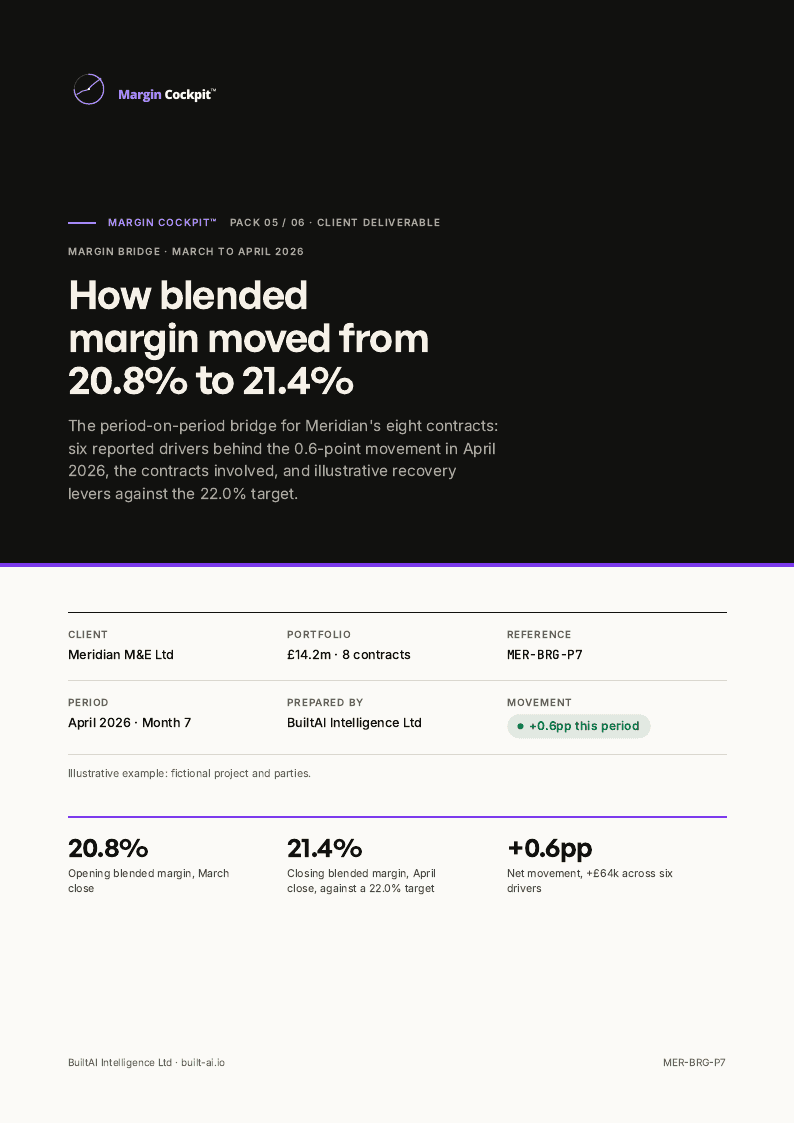
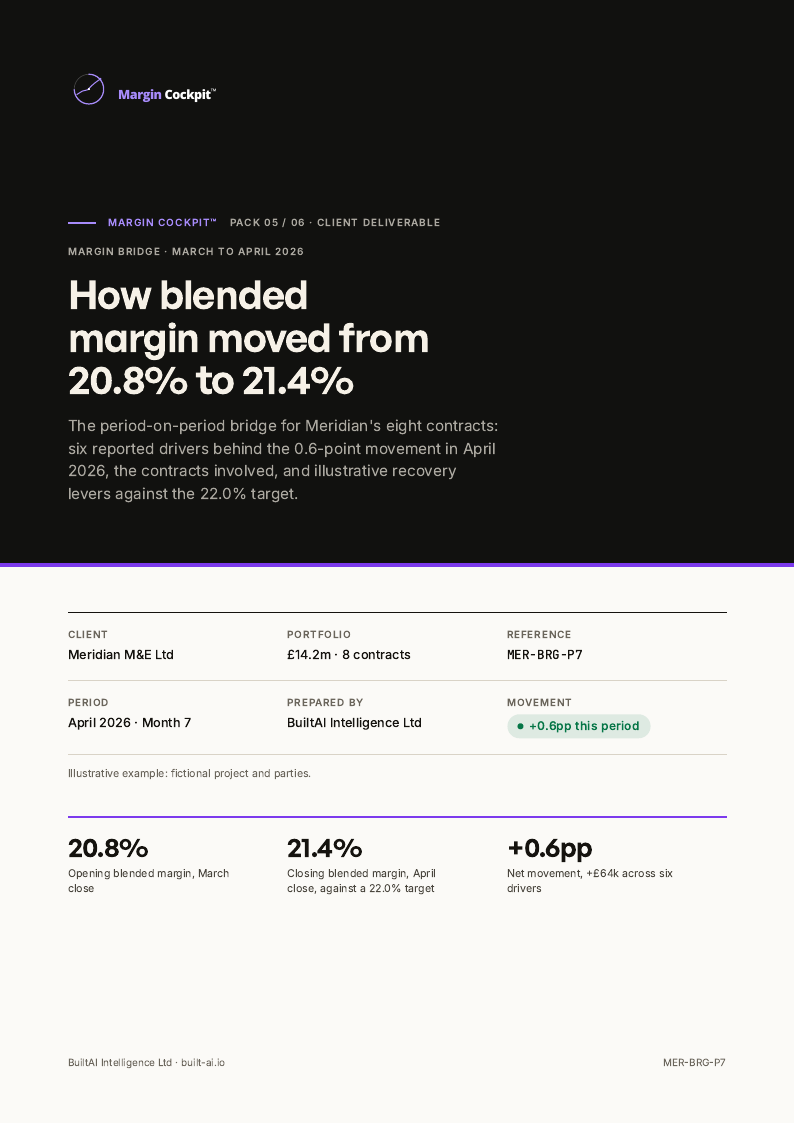
The margin position and forecast by project and for the portfolio, with the bridge from last month explained line by line.
Commercial director reads the bridge
Open the stage exampleWIP, CNI and blockersStage 3 of 5
The Drain
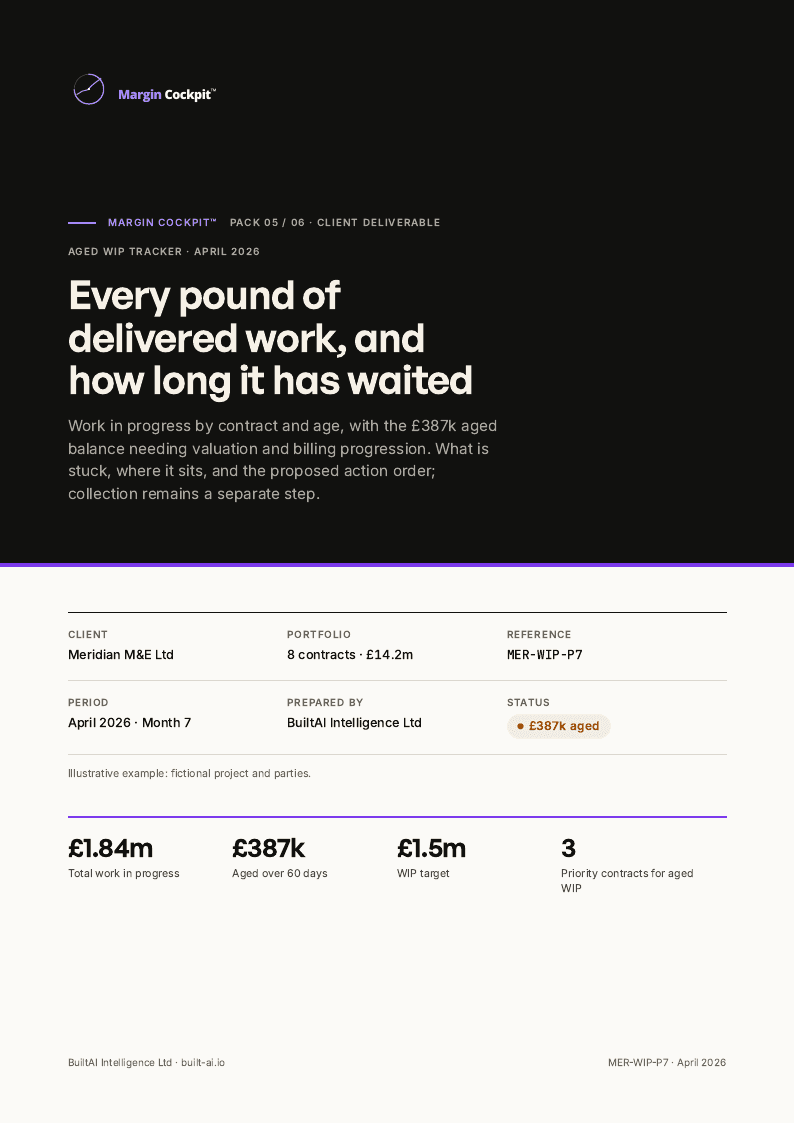
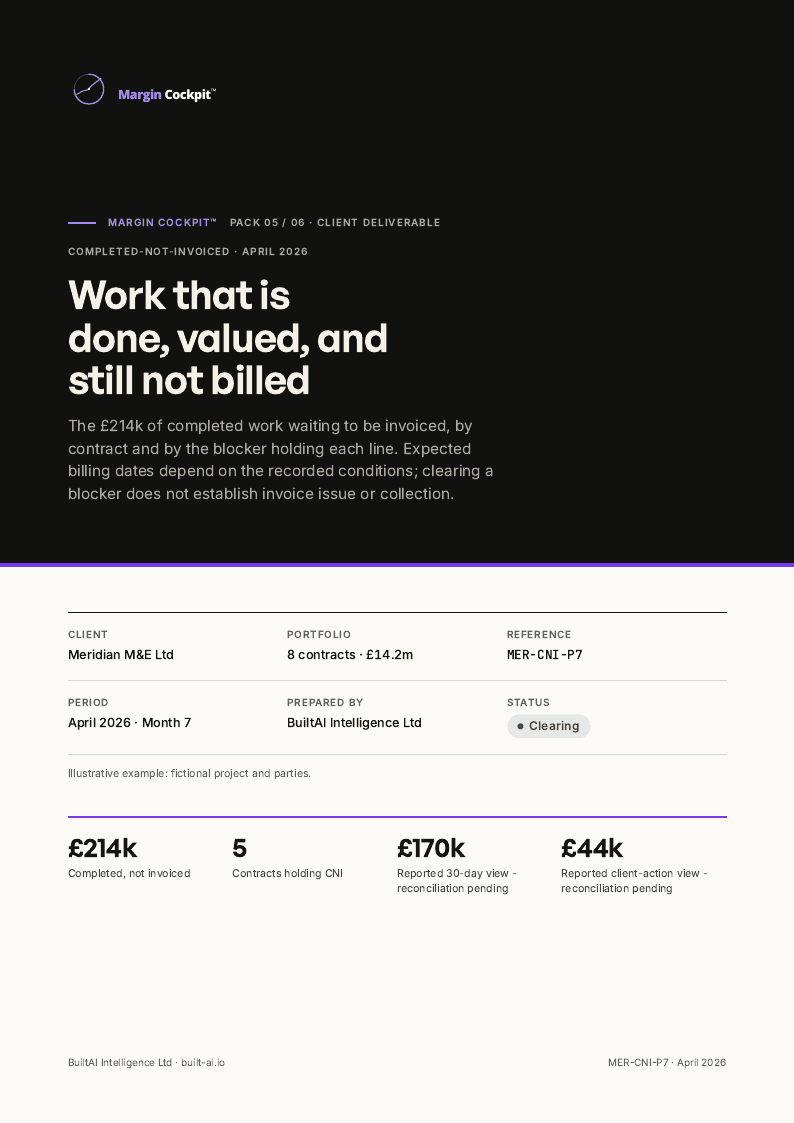
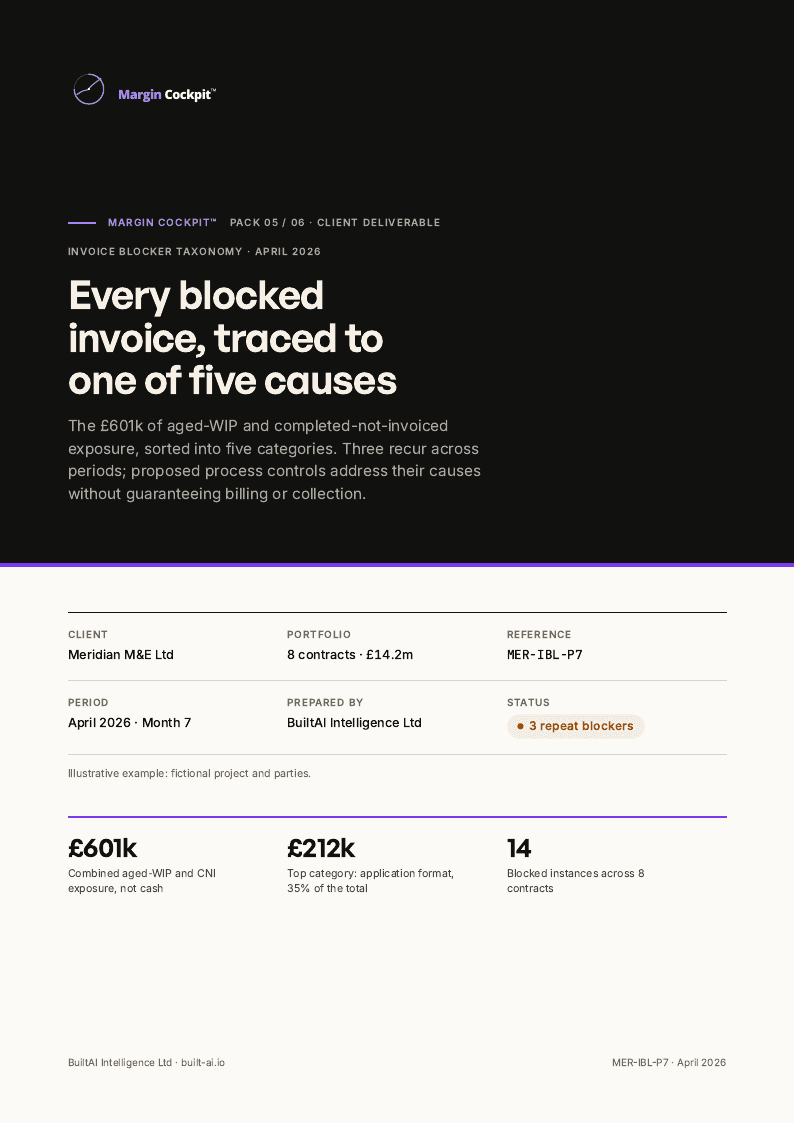
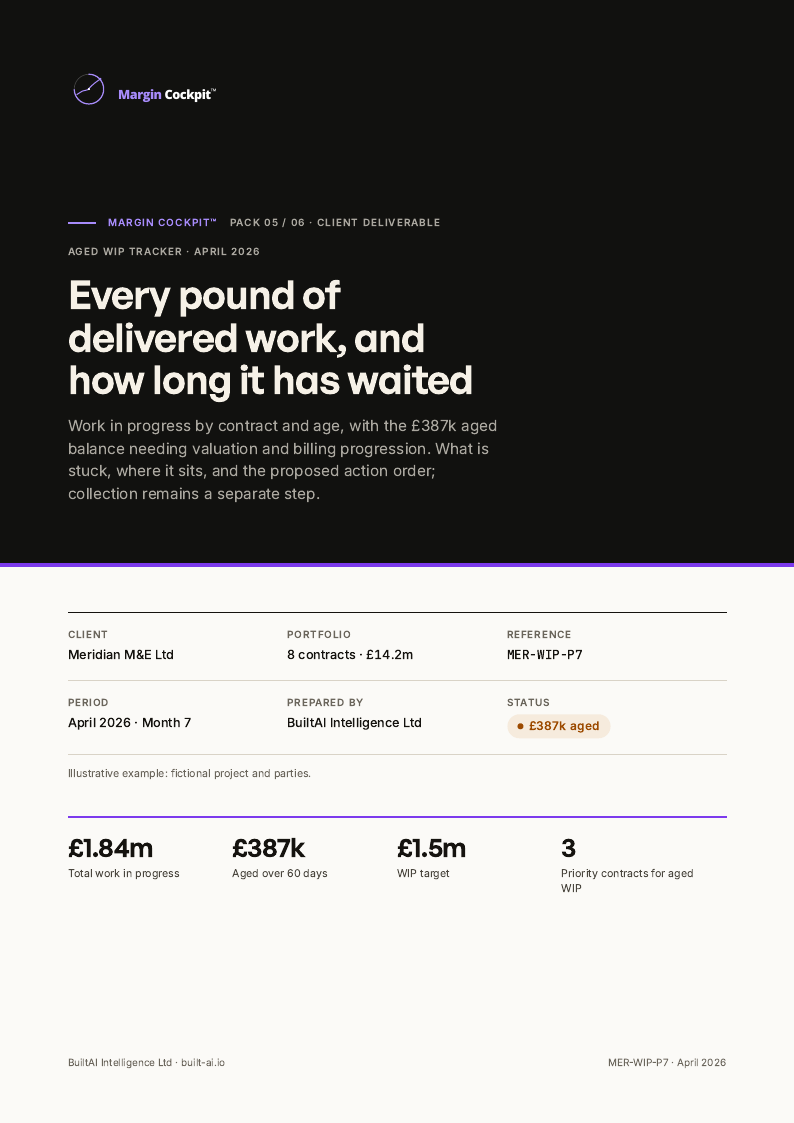
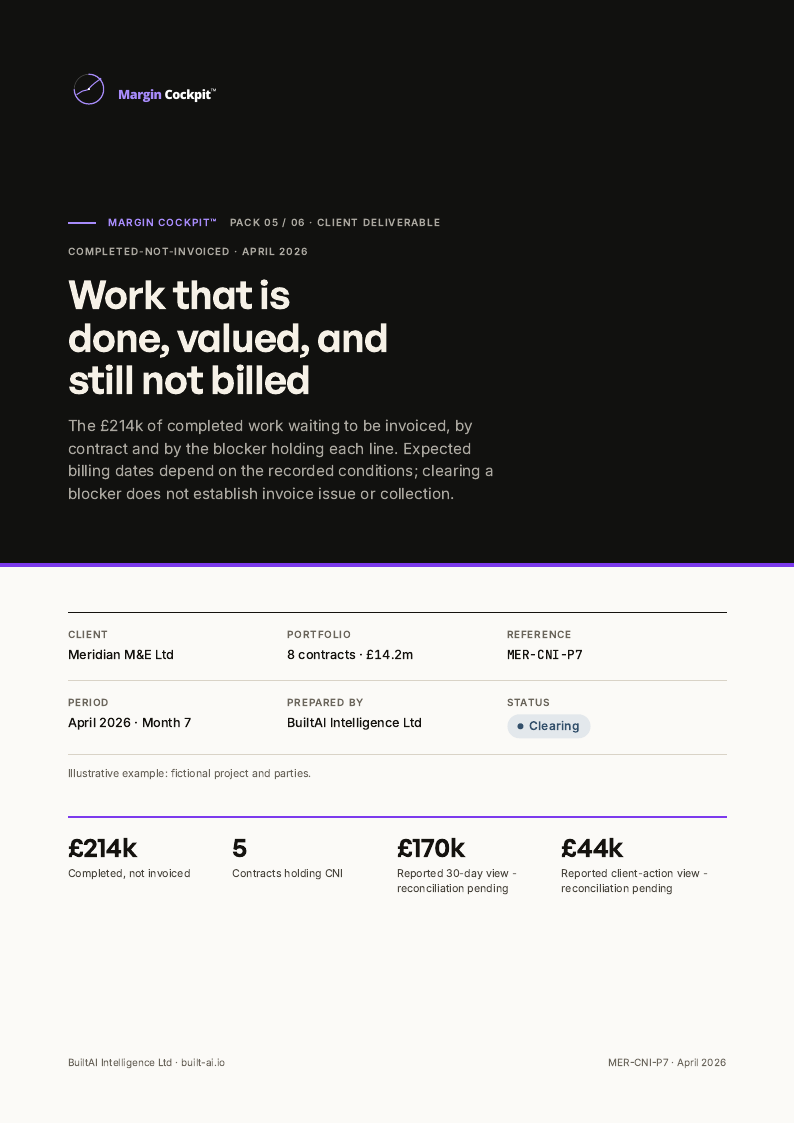
Aged WIP, completed-not-invoiced and every invoice blocker classified, with an owner and a date against each.
Commercial manager owns the actions
Open the stage exampleVariations and deductionsStage 4 of 5
The Shield
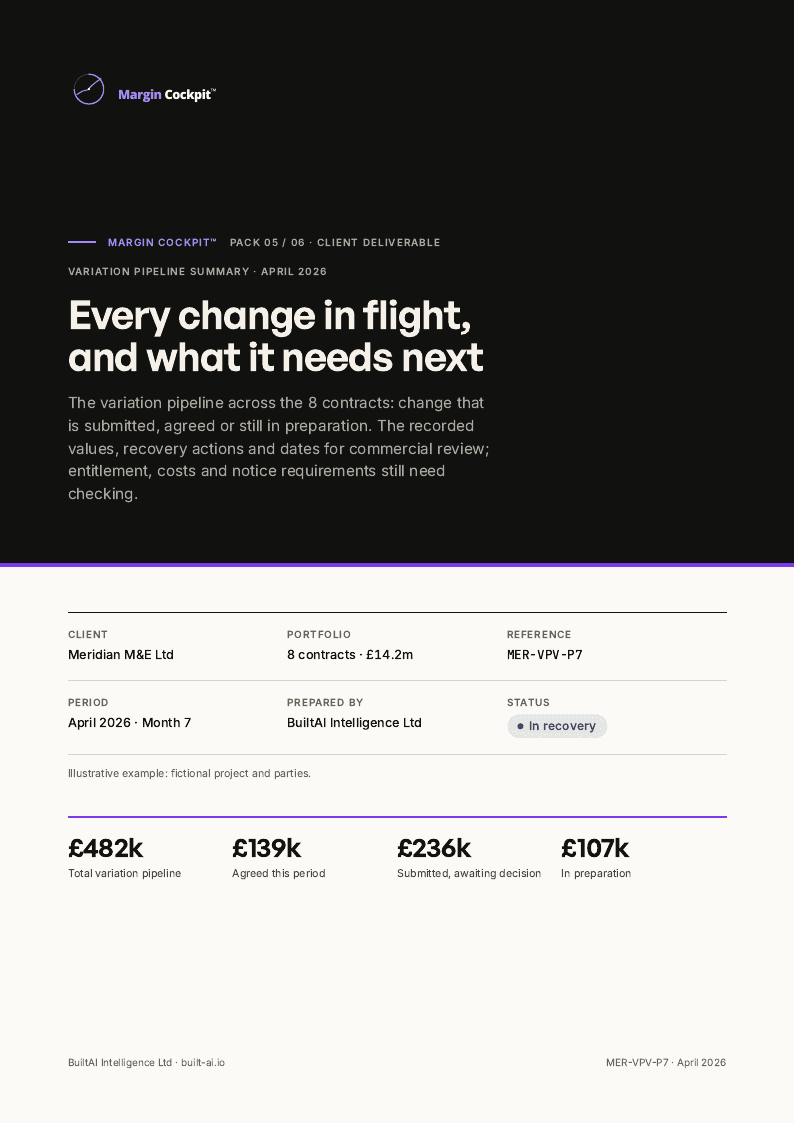
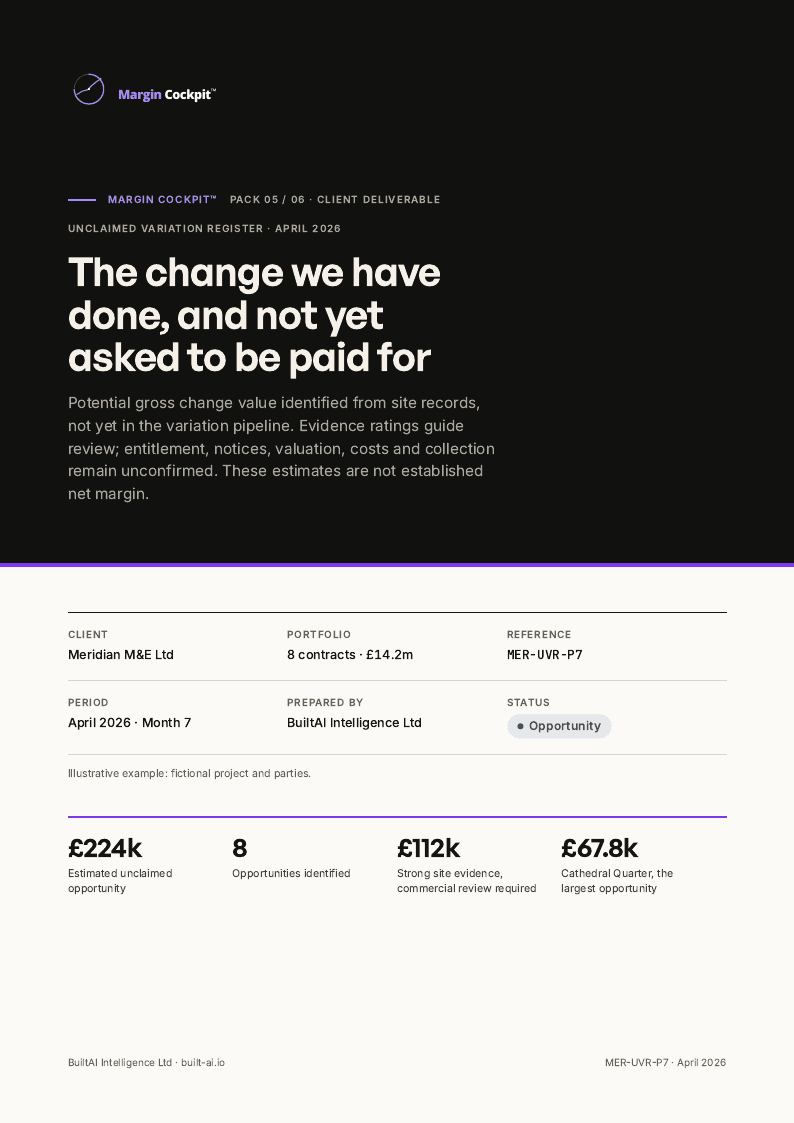
The variation pipeline, the unclaimed register and the deductions position, so the month's recovery is visible before it is lost.
QS confirms the pipeline
Open the stage exampleAction packStage 5 of 5
The Pulse
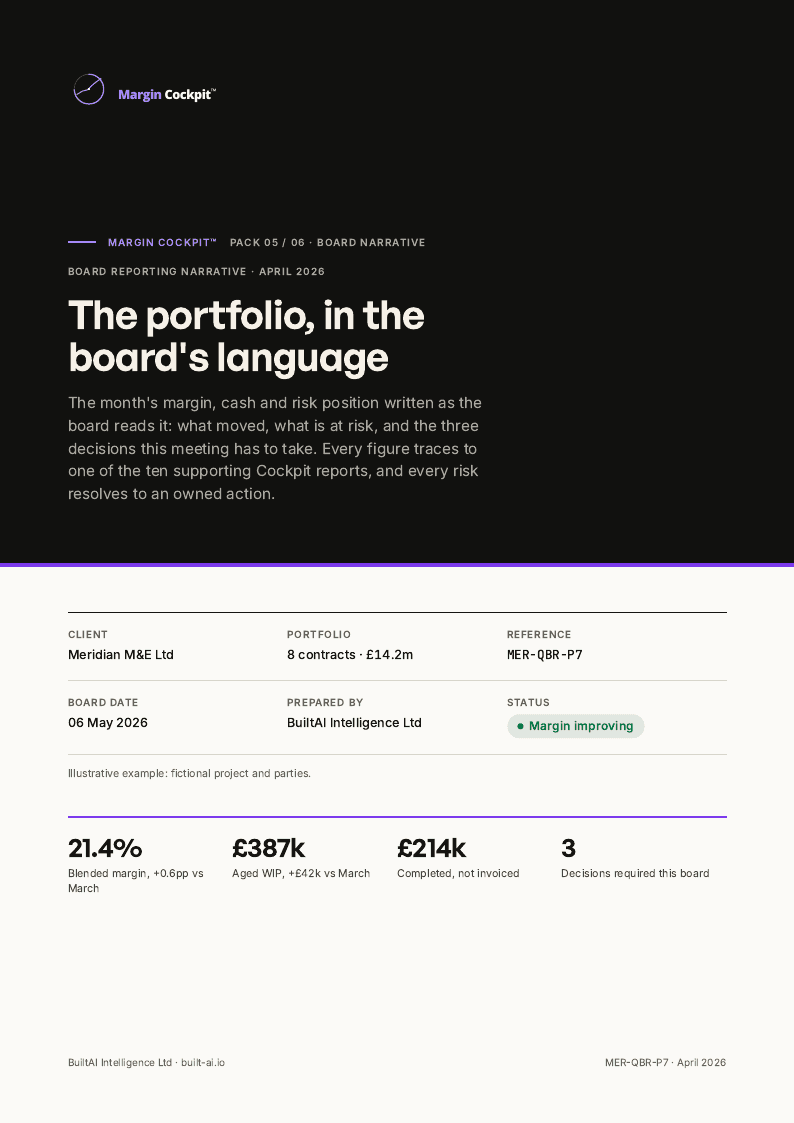
The board narrative and the action pack: owners, dates and decisions, in the same order every month.
FD signs the board pack
Open the stage example
What comes back
Eight documents in the month-end pack, from margin snapshot to board narrative.
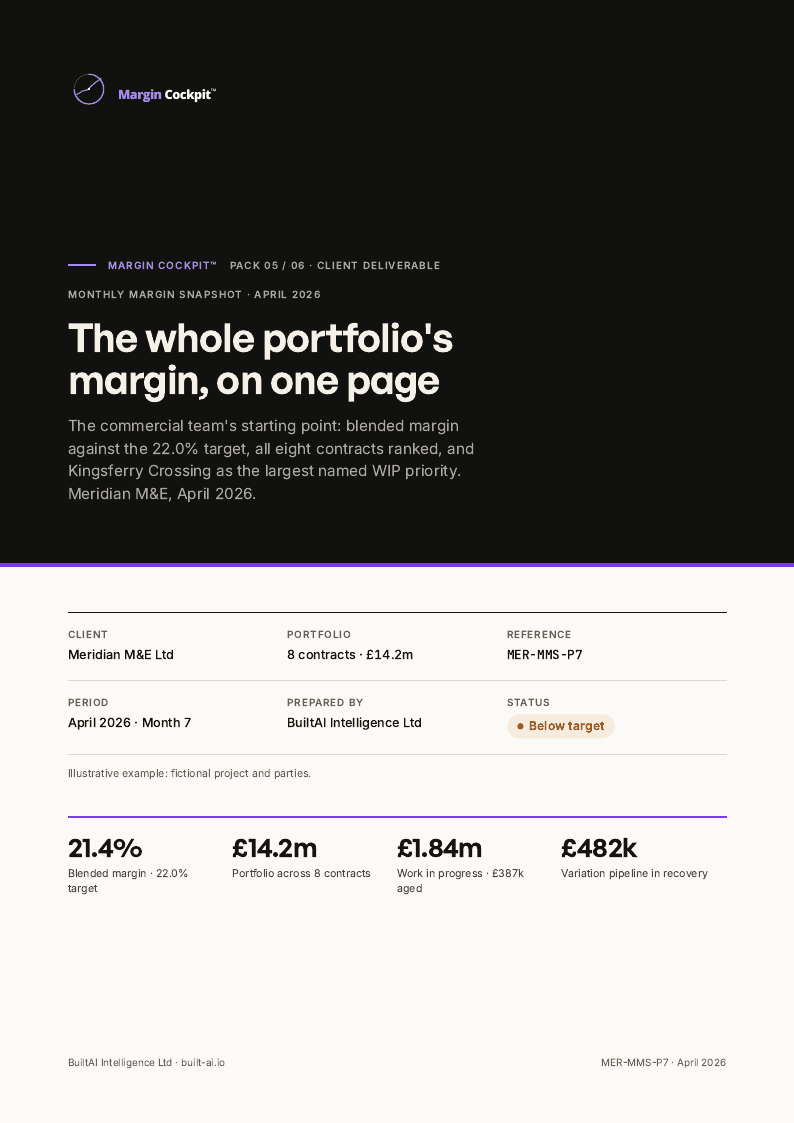
The snapshot, bridge, trackers and narrative are sample draft views. They include unresolved summary allocations that need finance and commercial confirmation before they can be read as one reconciled month-end position.
- Stages
- 05
- Documents
- 08
- Review
- Named
Worked example on a fictional job.

Margin Cockpit
Worked example · BAI-MC
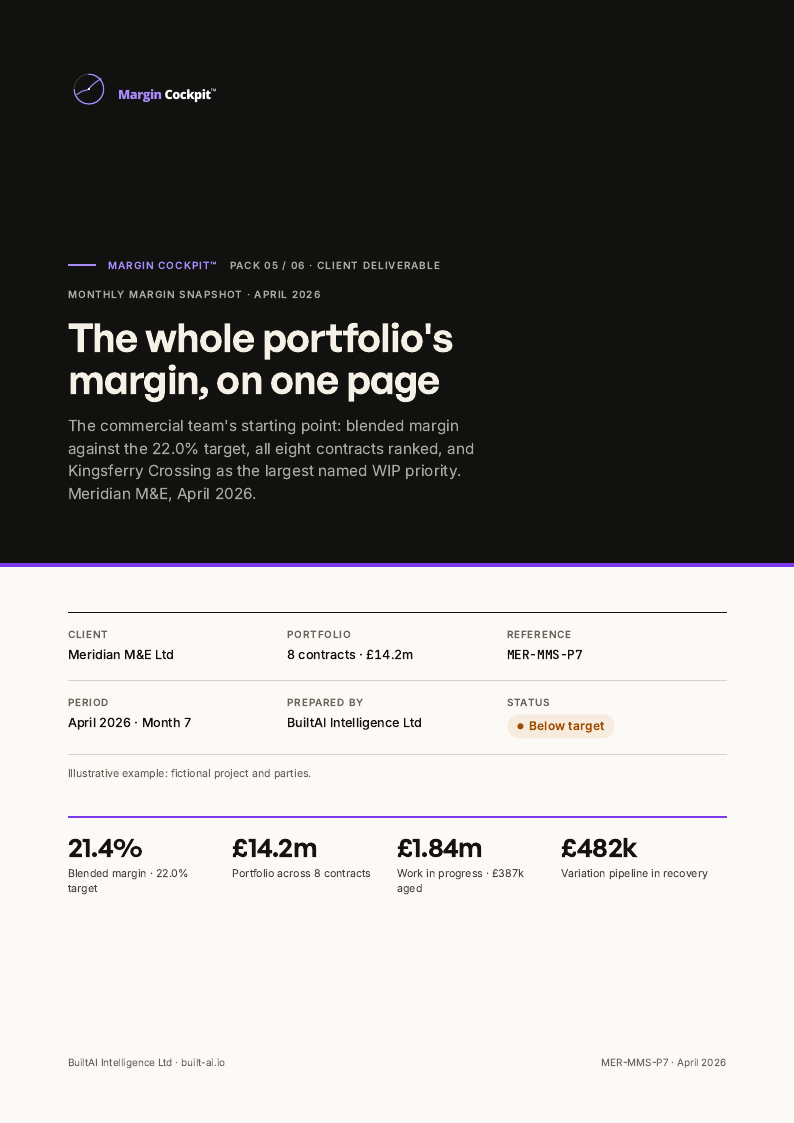
- Monthly margin snapshot3 pages
- Margin bridge4 pages
- Aged WIP tracker3 pages
- Completed not invoiced2 pages
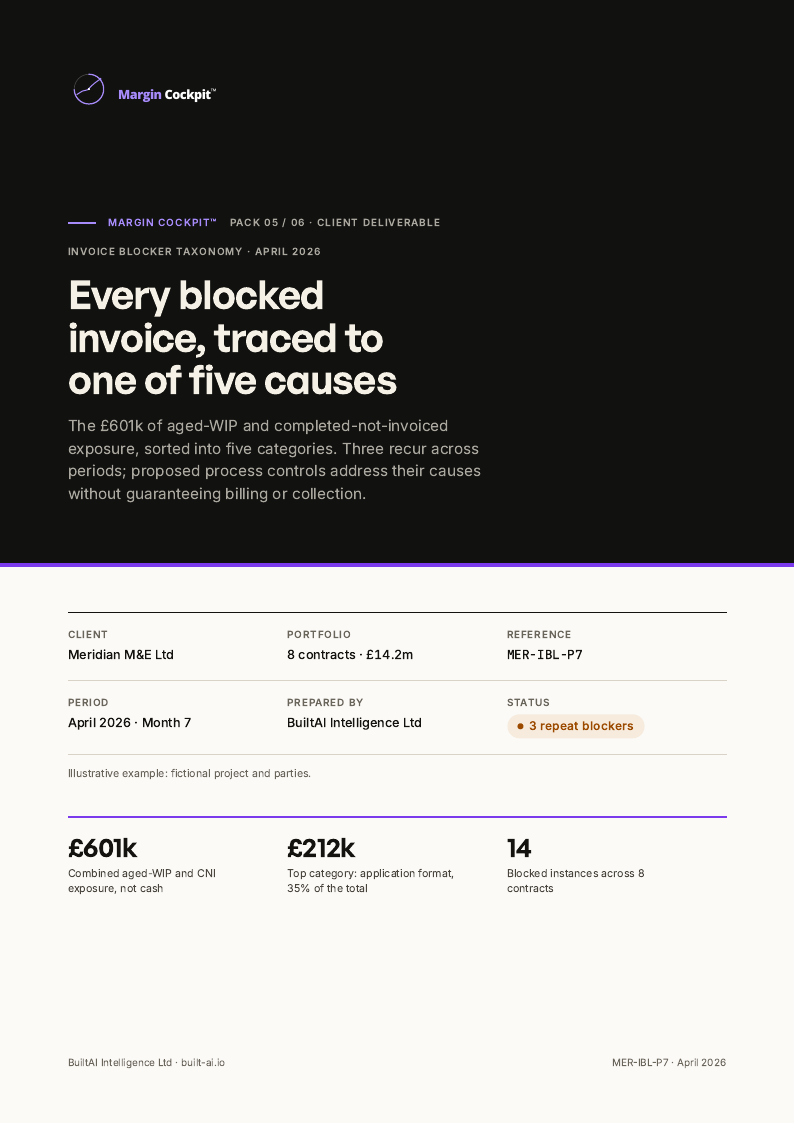
- Invoice blocker taxonomy4 pages
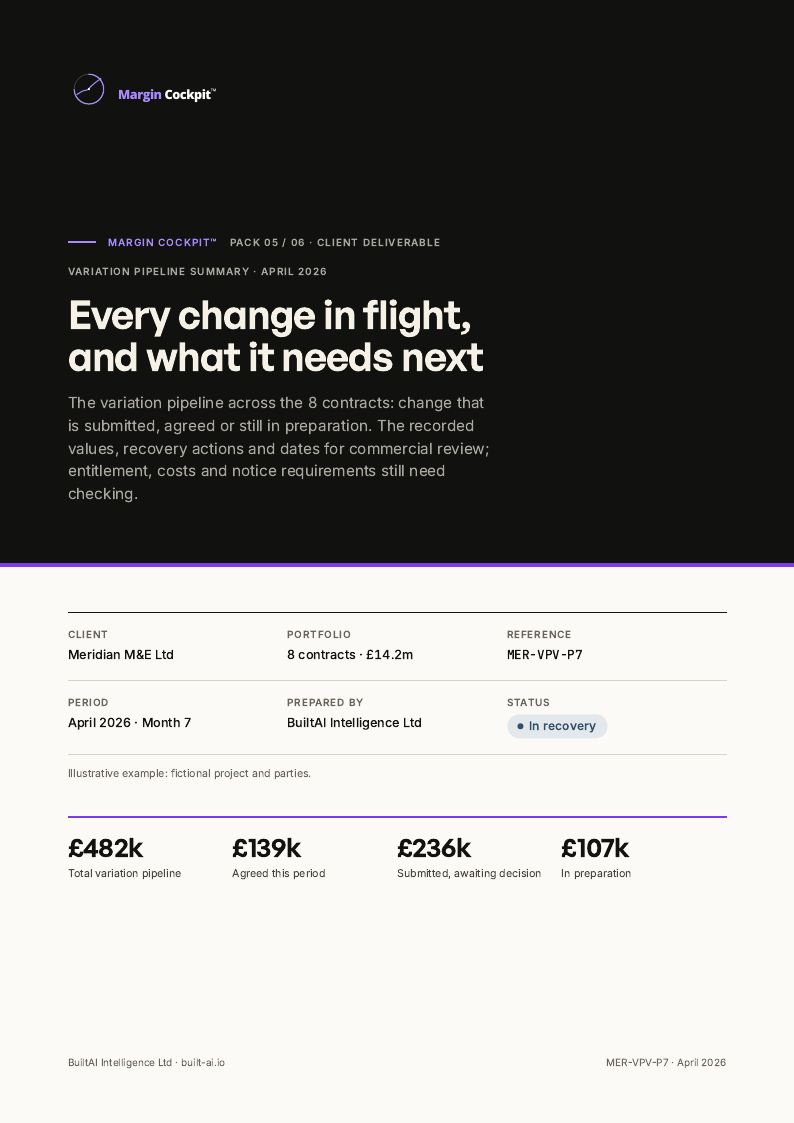
- Variation pipeline summary3 pages
- Unclaimed variation register3 pages
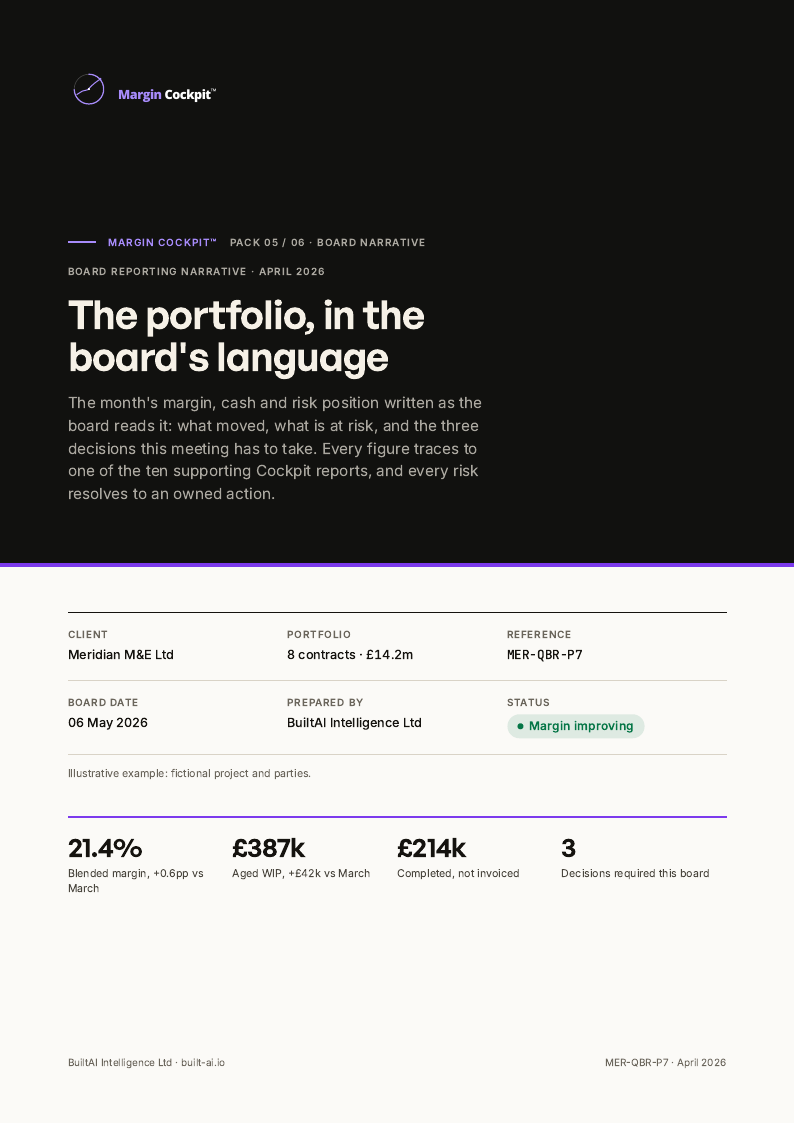
- Board narrative3 pages
Worked example on a sample portfolio: one month-end close on a mid-sized contractor's live projects. The full documents are on the worked-example page, one link from the top of this one.
Open the worked exampleWho signs
The Cockpit reads the numbers. Your FD calls the position.
The Cockpit reconciles and drafts
Finance, WIP and variation data in; the snapshot, the bridge, the trackers and the board narrative out as drafts, every figure traced to its source.
Your FD decides
What the margin position means, which actions to take and what goes to the board stay with your FD and commercial director.
The issued pack locks
The board pack is recorded against the month with who signed it. An edit after approval voids it and asks for it again.
The gates, by role
Stage 5 of 5 · The Pulse
FD signs the board pack
Open the stage example
Stage 1 of 5 · The Feed
Finance lead confirms the data set
Open the stage example
Stage 2 of 5 · The Gauge
Commercial director reads the bridge
Open the stage example
Stage 3 of 5 · The Drain
Commercial manager owns the actions
Open the stage example
Stage 4 of 5 · The Shield
QS confirms the pipeline
Open the stage example
Where it runs
The Cockpit runs in The Plant Room, stage by stage, gate by gate.
Your finance and commercial teams see each stage of the close, who reconciled it, who cleared it and what is next to run.
The Plant Room →05 / Questions
Before we talk.
Questions teams ask about this pack. The 30-minute call covers the rest.
Do we need a data warehouse before this lands?
No. Margin Cockpit assembles from your existing finance and operations sources (Sage, Xero, Procore, spreadsheets). It is a discipline layer over the data you already have, not a warehouse migration. If the underlying data is missing entirely, we would recommend the Operational Intelligence Audit first.
Will the board pack assemble itself, or does someone still write it?
Both. Each delta carries a category, a source pointer and a narrative template that populates the draft. A finance lead reviews and signs off the pack before it goes to the board; the pack is a draft until a person has reviewed it. We do not auto-issue board reports.
How does this hold up under external audit?
Every reported margin movement is traceable to an operational record (project, instruction, recovery line), so an auditor can sample against source-pointed lines. That is the evidence-and-narrative rule applied to monthly reporting.
Build a clearer route from month-end data to board review.
Tell us about the CVR, the source data and where the month-end close gets held up. Arrange a 30-minute call to explore the next step.
How the commercial model works →